Monday, February 4, 2013

Israel Day 8 - Monday - The Kibbutz

Monday morning, we head for a farm, otherwise known as a kibbutz.  Given our progressive crowd of ‘food justice’ people into the community gardening movement at home, I thought it was to be about food.  And indeed, our first stop was at an organic kibbutz that is one of the most eco-friendly and least-privatized farms still in operation today (out of 270 still operating). But I had no idea how integral kibbutzim were in Israel’s development or identity.

The first and second aliyahs (wave of Jewish immigration; 1881-1903 and 1904-1914, respectively) were mainly Russian/Eastern European Jews (coinciding with the Russian pograms) who wanted to be farmers.  In most of Europe, Jews had been forbidden to own land, which factored into why they became successful merchants and bankers. (Unfortunately, these professions also factored into how they were scapegoated during the anti-Semitism of the 1930’s).  But where the first aliyah consisted of smaller groups with religious motives, the second aliyah had an ideological zeal around a collective method of farming. To give the ideology roots, Jared read to us a section from A.D. Gordon, a Zionist immigrant to Palestine in 1904 and the ‘spiritual force behind Labor Zionism’.  Gordon valued the dignity of labor and felt that return to the soil would transform the Jewish people and allow its rejuvenation.


Olive Grove
“The Jewish people has been completely cut off from nature and imprisoned within city walls for two thousand years. We have been accustomed to every form of life, except a life of labor- of labor done at our behalf and for its own sake. It will require the greatest effort of will for such a people to become normal again. We lack the principal ingredient for national life. We lack the habit of labor… for it is labor which binds a people to its soil and to its national culture, which in its turn is an outgrowth of the people's toil and the people's labor. …

“…I think that everyone of us ought to retreat for a moment into his innermost self, free himself from all outside influences - both from those of the gentile world and even from the influence of our own Jewish past - and then ask himself with the utmost simplicity, seriousness, and honesty: What, essentially, is the purpose of our national movement? What do we expect to find in Palestine that no other place can give us? Why should we segregate ourselves from the nations among whom we have lived our lives? Why leave the lands of our birth, which have fashioned our personalities and so largely influenced our spirits? Why should we not share full and unreservedly with those nations in their great work for the progress of mankind? In other words, why should we not completely assimilate ourselves among those nations? What stops us?

Benny showing us how to squeeze a fresh olive
 
“Surely it is not religion. In our day it is quite possible to live without any religion at all...the answer is that there is a force within every one of us which is fighting for its own life - which seeks its own realization…

“Jewish life in the Diaspora lacks this cosmic element of national identity; it is sustained by the historic element alone, which keeps us alive and will not let us die, but it cannot provide us with a full national life. What we have come to find only in Palestine is the cosmic element... We come to our Homeland in order to be planted in our natural soil from which we have been uprooted, to strike our roots deep into its life-giving substance.”
Kim and the inky oil from a black olive

This choice, however, was a tough road to hoe.  The fact that Jews had been forbidden to own land meant that they arrived with little to no agricultural skills.  Palestine is mostly desert country with rocky soil, while the Galilean river valley area was swampy.  Pictures of the early kibbutz on the shores of the Kinneret (Sea of Galilee) show only 2 trees.  And the native populations of Arabs and nomadic Bedouin were not happy to receive these settlers, leading to raids and harassment. (At this point, land was being bought from the Ottoman Empire by the Jewish National Fund, sometimes with coins donated at cash registers in the U.S.)  The labor, financial resources, and security made group settlement a necessity.  But people in the second aliyah were taken with the socialist revolutionary spirit of the times as well. 
Holding the inheritance from God; Soil

The first kibbutz was founded in 1909.  Their dream was to work for themselves to build up the land, and in the process, build a nation.  These were the idealists that planted not only the intellectual seed of Zionism, but they also planted it geographically, establishing the connection to the actual land.  And in fact, our host, Benny, at Kibbutz Sede Eliyahu, asked us to pick up the soil and hold it in our hands, saying, “this soil is our inheritance from God.” 

This nation-building mindset required a certain amount of militant toughness.  We visited with two elderly kibbutzniks, but the words of Yehudit, a woman in her 80’s, stuck with me most. Yehudit explained that the kibbutzniks recognized that there was no possibility to have a Jewish state in Europe, so they came to Palestine to both have a socialist state and to change the Jewish character in one generation. “Jews have always been afraid. We were survivors.  The way of the Jews [historically] was to hide, to run, to cry.  We were not a people to stand up for ourselves.”  The kibbutzniks were leading a revolution to change their lives to be positive people.  The young people leading the revolution largely left religion behind, partly in line with socialist ideology, but partly also to wipe out all the traditions of the Diaspora (i.e. when Jews were scattered across the nations).  So the Kibbutzniks were forbidden to be polite, because to be polite is to be a hypocrite.  Kibbutzniks were raised to hate the character of Jews in Diaspora because they were not proud, but frightened.  So in this new character, babies were forbidden to cry.  People were not allowed to share their grief.  There were many who left, and others who committed suicide but left diaries with the suffering they couldn’t share in public.  According to Yehudit, the highest status was awarded to he who does the hardest work.  In 1943, her dream was to be “big, strong, fat, and a blacksmith.  I was most proud of my hands because these are the hands that build the country.  I was raised in a generation to do, to work, to create, not for ourselves, but for others.”  This was the creation of the New Jew.
Yehudit
Our other host, Aryeh Malchin, fought with the US in WWII, and then worked for a year smuggling concentration camp survivors – mostly children – into Palestine illegally when Britain was still limiting migration to 10,000 a year.  (Malchin described the ships, layered with secret compartments where people would have to lie down during the voyage and take turns sending representatives to the food lines).  Once caught, Malchin spent some time detained, and then founded another kibbutz.  He still lives there to this day at age 94, along with members of Dr. Mikva’s family. 


Farmland
 There are 270 kibbutzim in Israel today.  Most have undergone full or partial privatization.  Some, like the first we visited, continue to be communally sustained with meals prepared, cleaning, teaching, farming, and all other kibbutz jobs executed by members.  There is a communal dining hall, synagogue, athletic facilities, schools, and nursing homes on the kibbutz.  Some prefer to live on a kibbutz but work in the private world; in that instance, their salary is given directly to the kibbutz and they are given an allowance the same as all other members.

Our last speaker of the day was not related to kibbutzim, but rather was an Ethiopian Jew.  She spoke about how her family emigrated from Ethiopia – by foot – in a time of persecution along with 40,000 others.  Many were swindled, robbed, and some died and they only got as far as Egypt. Eventually Israel executed a covert mission to collect the population and fly them into Israel against Egyptian policy.  However, once settled in Israel, the community was met with skepticism from the Chief Rabbinate regarding their Jewish rituals and practices, which differed from the orthodox.  Since citizenship is granted based on religious identity, this threatened to leave Ethiopians out of Israeli society.  A compromise was eventually brokered to allow them citizenship, but life remains economically and sometimes racially difficult for Ethiopian Jews in Israel. 

...

Reflection: Sabra (aka prickliness)


Early in our trip, Jared had shared how the word ‘Sabra’, hebrew for cactus, is the self-appointed slang for the Israeli people.  The allegory was that they were prickly on the outside, but soft in the middle (and probably related to survival in the desert.)  This kept surfacing in my head while listening to Yehudit say they were attempting to recreate the Jewish character in one generation.  Ophir’s ‘judgmental Israeli society’ became alive in her story, with the unwillingness to entertain suffering or trauma.  She was very proud of their success, too, saying it only took 55 years.  


We have a similar pride in the frontier toughness and ‘bootstrap’ ideology of the American story, and respect for those of worked the hardest to found our nation.  There is personal agency (as in the ability to act in your own self-determination)
in both stories, to make the choice to pick up and move, which is empowering and transforms the story from tragic, about persecution, to proud, about ability.  But while the origin of the story is also religious persecution, my understanding of the American goal was not erasing the traditions and personal character of the past, but creating the arena to cleanse it of corruption. And while this is the prevalent narrative in America, it is far from the whole truth, especially if you were Black, Native American, or many other scapegoated minorities.

The idea of wishing to change the Jewish character is fascinating to me.  I wish I had asked Yehudit what she feels about the conflict now; that the military side of Israel has fully embraced the tough, aggressive exterior planted by the kibbutz movement.  Would she still be proud of the impolite ‘New Jew’?  I found myself contemplating how Yehudit’s story mirrors children who have experienced trauma, especially if perpetrated by their parents through abuse, alcholism, or mental illness, sometimes develop a tough outer facade.  When trust is broken with the person or persons who are most directly responsible for their well-being, some children overcompensate for their pain by showing no weakness, as if to say, ‘everything is fine.  I can take care of myself.’   No crying.  Not showing pain.  Some children learn to show no emotion; others become bullies of those who most reflect the weakness they are trying to hide.  Eventually this behavior becomes damaging to others, and also to the child themselves.  

In our conversation with Sami at the Holy Land Trust, he asked the question, ‘what healing needs to happen within the Jewish people so that they can deal justly with Palestinians?’  In an individual, that’s got to be introspection, analysis, painful realization, modified behavior and atonement.  What does self-recognition look like in a national identity?  Perhaps this recognition of the kibbutzim role in Jewish identity is part of that introspection and analysis.  

I don’t know if a traumatized child is an apt metaphor because the actions of the Isreali government and military, and some of the political voices, are really just intent on placing their desires for a Jewish state above any consideration for Palestinian self-determination.  And if by parents, my metaphor abstractly refers to ‘the world’ and our collective conscience, the Palestinians are certainly not just some kid on the playground getting ridiculed (although humiliation is definitely part of the occupation). They simply were the politically weakest people in a game of political titans with first-world self-importance deciding their fate.  With Sami at the Holy Land Trust, we also talked about the ability of Palestinians in his work to have agency, to have some self-determination in their conscious actions towards peace.  The most damaging part of the occupation of Palestine is not the loss of land, but the occupation of their lives.  The inability to travel, to build, to farm, to create a livelihood.  It’s the loss of agency, which is a natural human drive.  When someone is robbed of almost all ability for self-determination, you still grasp for power. When so many avenues are closed to you, you still search for ways to make an impact. There is agency in choosing a jihad of suicide bombing - you make a choice to have your life make impact, however unfathomable. It’s important to create other avenues for Palestinian agency in this conflict, which is why I so appreciate Sami’s work.  The peacemakers we met with - not just Sami, but Marwan in the Aida Refugee Camp, Iyad our tour guide - are having the opportunity to take action, however small, in this bloody conflict.

From my political background, I know that Power concedes nothing without a Demand, backed by equivalent Power.  But I also know that politicians are not leaders, but follow the will of the people, and every revolutionary battle has been led from the inside, by changing the will of the people internally.  Every person we met with- on both sides- continually said that the conflict cannot be resolved by outside forces, but that it must be resolved from within. Signing a treaty for peace at Camp David, they said, means nothing at home.  Changing the will of the people often requires radical and shocking action that upends the order of the social system and reprioritizes value; like chaining yourself to an oil rig about to be sunk in the North Sea, or risking your life in marches or freedom rides that leave you exposed to dogs, fire hoses, and murder. It’s the radical action of making your life vulnerable in service to others, or your cause, that shocks people enough to think twice about their value system.  When the nation of Israel is ready to make peace, the nation will have to come to the table with vulnerability, not prickliness - with admonission of fault, recognition of Palestinian losses, and true apology. Because the
cactus, although plentiful in Israel, is not a native species.  

Friday, February 1, 2013

Israel Day 7 – Sunday – Politics in Israel


Labor Party's Jerusalem HQ
We closed Shabbat with the Havdalah blessing (more on that later) and visited the Labor Party, as it was 3 days before national elections in Israel.  Labor, a historic socialist party in Israel, had fallen to its lowest numbers in the last election, and our hosts were fighting to rebound.  They were focusing on what we call ‘bread and butter issues’ in this election – fighting austerity measures in Israel and concentrating on the price of groceries and wages. (Interestingly, the price of groceries in Israel is actually set by the government, not the market).  Labor, along with other center-left parties, did much better than expected, while Likud, that had been running the government for the last 5 years, took a beating. 

St. Georges Anglican Cathedral, Jerusalem


After attending Episcopalian services in English Sunday morning (with a perfectly inspiring sermon; ‘Paul does not intend for us to sit on the premises while singing, “Stand on the Promises of Christ My King”), we spent the day learning about social issues and advocacy in Israeli society.  There are 34 political parties in Israel that function in a coalition government (which means when people vote, rather than geographic representation, each party receives a percentage, and that percentage of their chosen representatives joins the Knesset.)  Each party prepared a list of 120 names prior to a national election.  If the party were to win a majority, their first name would be their candidate for Prime Minister (and if they got 10% of the vote, the top 12 names would join the Knesset).  But, this is only the beginning – from here it gets complicated.  The party that wins the most, (this time 19 & 17% respectively), spends the next three weeks horse-trading with the other parties to bring together a unified group that has received 61% of the vote.  If successful, this will be the ruling majority, who will control the Prime Minister position, fill the portfolios (something like a cabinet that heads each section of government), and pass most of the laws over their term.  The minority can draft laws, but they must make creative alliances to be successful in passing any legislation.  If the top vote-getting party fails to bring together this majority in the time allowed, the Knesset President selects a different party to make the same attempt.  This happened in the last elected government, which is why Netanyahu, who came from the second vote-getting party, was able to be Prime Minister.

There are parties in Israel ranging from Labor (center left worker party) to Likud (right wing security party) to the Jewish Home Party (believes that Palestine should be abolished).  The surprise winner (2nd place) in January’s elections was the Yesh Atid (translated; ‘There is a Future’) party, headed by a well-known (and handsome) former news anchor.  The main platform of the party in this election is to change military conscription to include ultraorthodox men. Currently, military service, mandatory for all Israeli men, is waived for the ultraorthodox if they choose to study Torah until age 45.  The policy echoes the respect Israeli society has for the very religious; however, there is growing backlash towards this group because, in order to study until age 45, most ultraorthodox men do not work and receive housing and other government subsidies, averaging around $1200 a month.  Demographically, this group is primed to become the majority in Israel by 2050, as they average 6.5 children per family.  (Incidentally, although ultraorthodox women have a subservient status in their society, they not only do the childrearing but also work outside the home to support the family. More on this later.)     

Both the visit with the Open House GLBT Center and the Israel Religious Action Center talked about the peculiarities of balancing the elements of theocracy in Israel with modern laws, since there is no separation of religion and politics in Israel. In matters of family law, citizens of Israel must go through the rabbinical court system. For example, Israel recognizes marriages from any country, and you can be married according to your faith tradition or in civil court. However, the religious authority for Jewish marriage is the Chief Rabbinate and Rabbinical Courts, which, as I’ve said, has always been ultraorthodox up to the present.  That can be challenging for a secular couple, or an interfaith couple, as well as a gay couple.  So many people simply leave Israel to get married in Cyprus or Canada.  This becomes a major problem, however, in divorce.  For Jews, the Rabbinical Court is the only court that can grant divorce, and this must be with agreement of the husband (women are not allowed to testify), according to Jewish Law.  If a man doesn’t agree, the woman, or partner, is stuck.  Family court may decide matters of custody or alimony, but if the divorce proceedings are filed first in rabbinical court, the process can stall.    

The Open House host shared how challenging rabbinic law is regarding issues of surrogacy (at least, until May of last year).  The Rabbinate had declared that surrogacy from a Jewish woman who is already married is considered adultery, and the child will be a mamzer – someone barred from participating in the religious fabric of life (as in, they won’t be allowed to marry in rabbinical courts).  This designation of Mamzerim follows all children of this individual.  In addition to advocacy, the Open House focuses on counseling, HIV testing, and networking for LGBT people.  They are they only LGBT agency in Jerusalem, which is the religious center of Israel, and it’s an inspiring site to see their series of rainbow flags waving outside on the street.


The IRAC, an organization grounded in Reform Judaism, centers its advocacy through Jewish scripture (this is my kind of advocacy, as you may have guessed).  Our speaker said that too many secular Jews who only have contact with religion in terms of Orthodox Judaism link it with corruption, racism, and homophobia.  IRAC hopes to help progressive and secular Jews connect with Judaism, and reject those negative aspects.  (Essentially the same reason I went to Seminary).  In some instances, they act as watchdogs, such as to call out racist statements sourced in Jewish scripture or when spoken by state-employed rabbis. (For example, it’s against Jewish law to kill unless you are saving a life. One rabbi said that if you are killing to save a Jewish life, then it’s not against the law – essentially validating brutality in the Israel occupation.)  The employees of IRAC issue counter interpretations and call out the racism in the media.  IRAC is also part law firm, part grassroots organizing for equal rights.  In 1999, gender segregation began on public buses in Israel.  (Yes, I said buses became segregated in 1999).  The ultraorthodox created this policy because they believe that men need to exist in a sphere that is pure of women, so they don’t become distracted from their studies.  Women were to enter and sit in the back of the bus, men in the front.  IRAC fought this policy in 2002 and won in the Supreme Court in 2010, causing statements to be posted in all buses that all are welcome to sit where they choose.  However, in ultraorthodox neighborhoods, segregation continued.  So IRAC has been organizing groups of ‘freedom riders’ – women who enter ultraorthodox neighborhoods and purposely ride in the front of buses.  They have heard from many ultraorthodox women that the presence of these women gives them the cover to resist the social pressure to ride in the back of the bus.  IRAC also takes on the marketing bias in Jerusalem, where the pressure from the religious conservatives pressures advertisers to censor or remove the women from their billboards, lest the women be considered inappropriately dressed.  (While in some ways, I think this de-sexualization of advertisement is something I’d support, IRAC points out that swapping out a smiling, fully dressed woman for a cartoon character is a systematic removal of women from the public sphere). 

Moriel Rothman discusses the situation in Silwan
We ended the day in Silwan with Moriel Rothman and the Rabbis for Human Rights.  Silwan is a neighborhood just past the ‘green line’ border in East Jerusalem, which is being steadily gentrified by incoming Israelis.  And while legal, the situation is one of the worse perversions of legality that we saw.  Prior to the 1948 war, Silwan was a strong Jewish neighborhood.  When the armistace lines were drawn, and Arabs were expelled out of Israel territory, likewise the (mostly orthodox) Jews living in Silwan were expelled from East Jerusalem.  These Palestinians who still live within Israel (and all their descendants) are called ‘present absentees’, or internally displaced Palestinians (IDPs), and are not allowed back to their homes or land.  Although those remaining inside of Israel were made citizens, their rights are not the same as Jewish citizens.  In 1950, Israel passed the Absentee Property Law and required anyone who wanted to claim their home to be present when Israeli officials visited; if not, their home was seized and likely demolished or given to Jewish refugees, which were flooding Israel’s shores in the years following the Holocaust. This is regardless of documents of ownership or intercession from Palestinian heads of government. (Wikipedia explains itbetter than I do.)


Home labeled as Jewish by new Israeli residents

This home is now divided in half and occupied by both a Palestinian and Israeli family

In recent years, however, Jewish families who hold deeds to properties in Silwan have been petitioning the Supreme Court to reclaim their home, and they have been winning.  Granted permission by the Supreme Court, these Jews (mostly Ultraorthodox) return with assistance from Israel’s government, which forces whichever Palestinian family has been living there to leave.  So while Palestinians have no claim to their former land, they are also, still, being pushed off of their current property in what is technically Palestine.  In response to this abuse of power, progressive rabbis and Israelis have been staging demonstrations in Silwan every week for several years – at their high point with 5000 rally attendees.  This was extremely controversial and emotional at first; when CTS’s first Israel trip joined the demonstration, several of the new Jewish residents came out of their homes to photograph them.  (This is a form of intimidation in Israel, as once you get on the watch list, you can get blacklisted.)  The protests have continued and seemed to slow – but not stop – this housing takeover.  Moriel Rothman writes about it in his blog here.  It’s heartening to see this show of solidarity and protest coming from within Israel…I just wish we could multiply them by 100.
…

Reflection: Movement

Israel’s government system is a maze that is fascinating and rife with challenges.  First and foremost, there is the tragic and infuriating conflict and abuse of the Palestinian population.  I think there’s a fair argument to be made that those Palestinians who stayed within the Israel nation and became naturalized citizens ended up with a better, albeit still shortchanged, political situation.  They have the right to vote, bring cases up against the court, and have the potential to collaborate with Jewish Israelis to fight for fairness – a long road, no doubt, but one with potential.  I heard conflicting accounts of the voting rate in the Palestinian territories.  One comment said that Palestinians vote only in the range of 20% as a protest to the state of Israel, another said the turnout was recently at 70%. Perhaps it varies depending on the area.  (This article claims that turnout of Palestinians was up 3% to 56%, the highest since 2000). At our Shabbat dinner at Ron Cronish’s house, joining us was a Palestinian Israeli lawyer who fights for human rights.  He was part of a protest to prevent road construction through Palestinian parkland, which was small in size, but promising in aspiration.  As it was 4 days before the election, our hosts asked him to heavily encourage all his acquaintances to vote, alluding that better turnout might make a difference in the outcome of the road construction.  Their hope that Palestinians might be able to move development plans through amassing political power felt familiar and auspicious.

As an organizer, I couldn’t help but be excited about today’s contents.  Just like the light show at Herod’s Castle, it’s a fascinating juxtaposition of ancient law and modern expectations.  Israel is a young society with so much potential movement, in contrast with the American governmental system which was designed, admittedly, to prevent any rash change.  In America, the burden of caring about the future of your country can be so exhausting.  You can feel like Atlas, holding the weight of the world on your shoulders, while pushing against intractable pillars of greed, media dominance, and paranoid partisanship.  We tried to pass national health care 9 times over the course of 100 years, and we still barely squeaked by with a market-based, conservative-inspired plan that has become the battle cry of socialist takeover.  Of course, being an activist in Chicago, the bedrock of organizing, is worse.  People see you coming a mile away; they know exactly what you are after, and they’ll try to blow you off like a dandelion fluff.  You have to arrive with the numbers, credibility and attitude to boot.  I’ve often longed for a professional situation where you could feel the impact you were making, rather than blindly hope until the vote is cast.

Israeli society, on the other hand, feels so unfinished.  From the absence of a constitution to the complicated dilemmas between religious and civil law, what I saw was potential.  Everything you do is pioneering and innovative.  I have always felt so fortunate to be in the narrow niche of faith and liberal politics, where methods are still being molded, leaders are still being discovered, and hearts are still being inspired in new ways.  IRAC is using this model to change laws, change minds, and change the face of what it means to be religious. Open House supports people challenging the Chief Rabbinate on matters of modern society – and winning.  Rabbis for Human Rights are able to make a media splash just by joining in solidarity with their Palestinians.  The potential for movement-building is wide open, inviting, and beautiful to these hungry activist eyes. 

Israel Day 6 – Shabbat!


I’ve never before been excited about a Sabbath, and heading into it, I’m not sure I was excited at the time.  But in retrospect, not only was it sorely needed, the two Shabbats we experienced in Israel lent a calm to the trip.

Before splitting into small groups for a Shabbat dinner with Isreali hosts, we joined Friday night services at a reform congregation that became popular in Jerusalem only after an Ultraorthodox neighbor snuck into one of their services and ran away with the Torah in hopes that the liberal reform congregation would leave the neighborhood.  Only after the publicity of the stunt did the congregation receive enough funding to build themselves a proper synagogue.  Thus begun my learning about religion in Israel.  Where we have ‘spiritual but not religious’, Israel has ‘Jewish but not religious’ – in that ‘religious’ denotes the ultraorthodox, and everyone else tends to self-identify as secular, even if they attend Shabbat regularly.  The State echoes this division, funding both the synagogues of the ultraorthodox and providing stipends and housing allowances (and military deferral) for ultraorthodox men who want to study Torah, but providing no financial assistance whatsoever for Reform or Conservative Jewish denominations.  There is a high respect in Israel for the devotion of the ultraorthodox, and in fact the two Chief Rabbis appointed by the Knesset have, up until now, been ultraorthodox. 

In our Shabbat service we were provided with prayer books that held the English translations of the Hebrew prayers (which are mostly sung) and if you listened carefully, you could follow along.  The Rabbi did occasionally insert a few English statements to keep his American guests (Chicago’s Catholic Theological Union was also in attendance) up to speed.  The message of the service was to shake off the remnants and pollutants from the week before and prepare ourselves for the presence of the divine.  During Shabbat, which is sundown on Friday to sundown on Saturday, Jews are to have a day of rest marked by the scripture, ‘do not create’.  The interpretation of ‘create’ leads most not to cook, work, ignite (as in your car), or turn on electrical devices.  This does require that food be prepared ahead of time, and it was interesting to see how the hotel dealt with Shabbat restrictions in feeding their guests.  (On Shabbat, there was instant coffee rather than brewed, because the water could be kept hot all night, while coffee could not.  You can turn things off on Shabbat, but not on.)  So Shabbat becomes quality time with family.  People walk, bike, play card games, study torah, sing, and generally spend time together.  The city of Jerusalem comes to a standstill – no buses, cars, trams, and scarce pedestrians because all the shops are closed.  

The Supreme Court Building
I was signed up for a bike tour of Jerusalem, which was ideal in the empty city streets…until you remember the amount of hills in Jerusalem.  It was, at times, like biking San Francisco.  But it allowed us to get a bit more information about the state of Israel and modern (West) Jerusalem. Yeni (yen–AI), our bike tour guide, brought us to a hill overlooking the Knesset (the lone house of Congress in Israel) and through the Supreme Court.  The interspersing of rectangles and circles in the architecture symbolizes that law is flat, but justice is round. He pointed out how the Supreme Court building sits higher than the Knesset, signifying the supremacy of the law.  He also told us that Israel does not have a constitution, which complicates governing and law in the land.  There is a set of laws that might be considered a Bill of Rights and can be used as a guide, but there is no bedrock document that is referred to when interpreting modern dilemmas, because many religious Jews believe there should be no law higher than Torah.  (Jared also said that the lack of a Constitution has to do with the haphazard beginnings of Israel; since a Constitution is usually written before the founding of a nation (in a time of unity), now Israel is a diverse nation and the process drafting a Constitution would create bitter partisanship, especially considering the interesting balance of religious and political supremacy in the land.)  Two Chief Rabbis, who are elected by the Knesset, advise the executive, congress and court system on matters relating to religion – birth, death, marriage, and divorce. The Supreme Court is felt, by most progressive Israelis, to be the beacon of democracy and justice – and answer to becoming too theocratic under guidance of the Chief Rabbis.  Anyone is allowed to bring cases in front of the Supreme Court, and Yeni commented that recently, a Palestinian argued and won a case before the Supreme Court.  (That doesn’t necessarily mean the Israeli Supreme Court is objective in American terms…see theLefternWall blog for more examples.)

Knesset building from under the pine trees
While standing on a hill under a cluster of Pines, Yeni remarked that the pine is not native to Israel/Palestine, and in fact is a patriotic sign of the war.  When Palestinians were forcibly moved from the area and their home demolished, the new state of Israel had to do something to prevent them from returning and rebuilding on the same portion of land.  Where they couldn’t put Jewish people, they planted the fast-growing pine tree to occupy the land.


We stopped near the Montefiore Windmill, the first and only windmill in Jerusalem, built in 1857 as a sign to the Jerusalem people that progress and civilization can live outside the walls of the Old City.  Yeni takes this opportunity to show us the panorama of Jerusalem – from the Old City on the left to the Security Wall and proposed E1 Zone on the right – and I take the opportunity to pick his brain about the occupation.  (E1 is a territory proposed by the Rabin administration (1995) and pursued by the Netanyahu administration that would unite Jewish settlements in the West Bank, and be surrounded by the same security fence.  This would heavily complicate Palestinian transportation between Bethlehem and Ramallah, two Palestinian towns north and south of Jerusalem, by making them travel around the outside of the wall enclosing the Jewish settlements.  More importantly, if Israel annexes the E1 zone, it effectively separates East Jerusalem, the Palestinian capital, from the Palestinian cities in north and south West Bank, effectively ending the potential for a Palestinian state.  As of November 30th, 2012, Israel approved building in the E1 zone, supposedly as retribution for Palestine’s successful move to be recognized by the EU as a non-voting member.)
The security wall in top right corner at tip of trees


Yeni professed to be a lefty leftist, and is against E1.  He wants better human rights for Palestinians, but he admitted to being scarred and jaded by the ugly side of the conflict.  Trained as a medic in the army, he was near a pizza restaurant when a bomb exploded inside during the second intifada.  Wanting to offer help, he rushed straight into the grisly sight of children’s torn limbs across the restaurant.  Later that night, he saw the mother of the suicide bomber on television, handing out candy.  Of this, he told me that Palestinians and the Jews are people with different values.  He wants them to have their state, and for Israel to be less aggressive, but he expressed cynicism that the two peoples could ever share a common culture or citizenship.  He questioned the motives of the Palestinian people as well – citing how, within 5 years of establishing Israel, Jews had set up universities and hospitals.  In Gaza, where Israel withdrew in 2005 and foreign aid is plentiful, Palestinians have focused on obtaining rocket-propelled grenades in order to take revenge (referring to the recent conflict in 2012).  It became clear how much violence takes a toll on visions for peace.
…

Reflection: Hope (or lack of it)

Our guide, Yeni
On Shabbat, I found myself contemplating the bloody turn of the second intifada, and how that complicated the instinct towards peace for so many Israelis.  I so appreciated the opportunity to speak with Yeni, a guide who was not enlisted to teach about peace, or identity, or politics, but simply shared his honest feelings on the matter of the occupation – someone to lend a new, independent, unassuming voice to what we were hearing.  Like Ben David, Yeni’s (inner) morals pointed him toward hope for a fair and peaceful resolution to the conflict.  But like Ben David, Yeni had developed a jaded outer crust towards the Palestinian people as a result of gruesome violence.  Living in a bit of a cocoon of bodily safety as I do on Chicago’s north side (the distinction is worth noting), I realize I can’t relate to the way spilled blood and uncontrollable violence can corrode your spirit and your hope.  But I think it’s a very real, visceral fear.  At one point early in our bike trip, as Yeni was speaking, there was a loud bang that startled us all.  We quickly found the source; a young woman, dressed in a punkish style, kicked an aluminum door a second time with such force that it reverberated all over the near silent street.  I thought how out of character, and probably disrespectful, it was to be out on the street creating such noise pretty early on the Sabbath.  But Yeni stared at her over his shoulder for nearly another two minutes.  I couldn’t help but wonder if that bang, which sounded eerily like a gun, caused a crisis reaction in his psyche. Just like it’s hard to teach fear to a generation that doesn’t know fear, I imagine it’s hard to unlearn trauma if you’ve seen it firsthand.

And yet, from Nusseibeh’s book, I remember the account of the would-be suicide bombers’ motivations for their crime; how a single mother with 5 children attempted jihad because she was so humiliated by Israeli soldiers who forced to strip and dance in front of Palestinian men at a checkpoint.  This public humiliation was enough for this woman to give up life – give up motherhood!  And it reminded me of a question Nilsa had asked; just what is a (wo)man’s breaking point?  How much can you push someone before they break, or become violent?  How far do you push someone before they give up on hope, and close the door to peace?

With each generation comes a new opportunity for social change.  I think about our issues at home; for some of my fellow organizers in Chicago, the social issues that are most in our sights are too easy.  They call the gay rights issue ‘won’, the fight for immigration reform ‘over’.  Why?  Because the upcoming generation has already acclimated to the victory. The majority of people in their 20’s know someone gay or lesbian, or have accepted the friendly stereotype so available in our entertainment, and so when this voting bloc becomes more engaged, the policy path is paved for victory.  (This is not to say the marginalization, bias, and discrimination is negligible.  Just that policy will change.)  Similarly, once a young person realizes they have been sitting in class next to an undocumented immigrant for the last 3 years in school, they rarely see the benefits of excluding that person from the American system.  The ‘illegal alien’ is also a friend, a classmate, or a team member on their basketball team. The dehumanization of labels becomes more and more difficult – especially in our social media age.

With each generation comes new opportunity for social change, but only if barriers are crossed, relationships are made, and walls are torn down.  Only if suicide bombings stop; only if Israeli abuse is curbed. Nusseibeh’s most salient point, in my opinion, was his statement of the wall as a barrier to relationship, not a barrier to terrorism. I am heartened that there exists the opportunity for Jews to enter their children into joint Jewish-Arab schools.  But listening to Ben David’s pride at teaching his children not to ‘hate Arabs’, but also hearing that the sentiment is often heard in Israeli circles, it feels like ‘peace’ is getting further out of reach.

I remember Ophir’s words – that if you’d take a ‘strategic risk’ in waging war, why not take a risk in waging peace?  For those of us who are not Chief Defense Ministers or holding a gun at a checkpoint, I feel like the most important risk you can take is to be vulnerable.  This may mean vulnerability in your geography, vulnerability in your principled stand, or vulnerability in your interactions with others.  There is vulnerability in opening your ears to hear your enemies’ story.  There is vulnerability in allowing your children to befriend the ‘other’ and try to balance the biases that will inevitably come falling down on them as they grow.  I guess the most important vulnerability is in taking the first step, the one that seems small, unexpected and impossible.  Sometimes, in our lives, small steps are all we can do to make Beverly Harrison right;  “Hope is believing in spite of the evidence…and watching the evidence change.”  But small steps lead to new generations. 

Israel Day 5 – Friday - Yad Vashem


Let me just start this post by saying, if it wasn’t for Ophir’s guidance on this particular day, I would have been lost, confused and flattened.

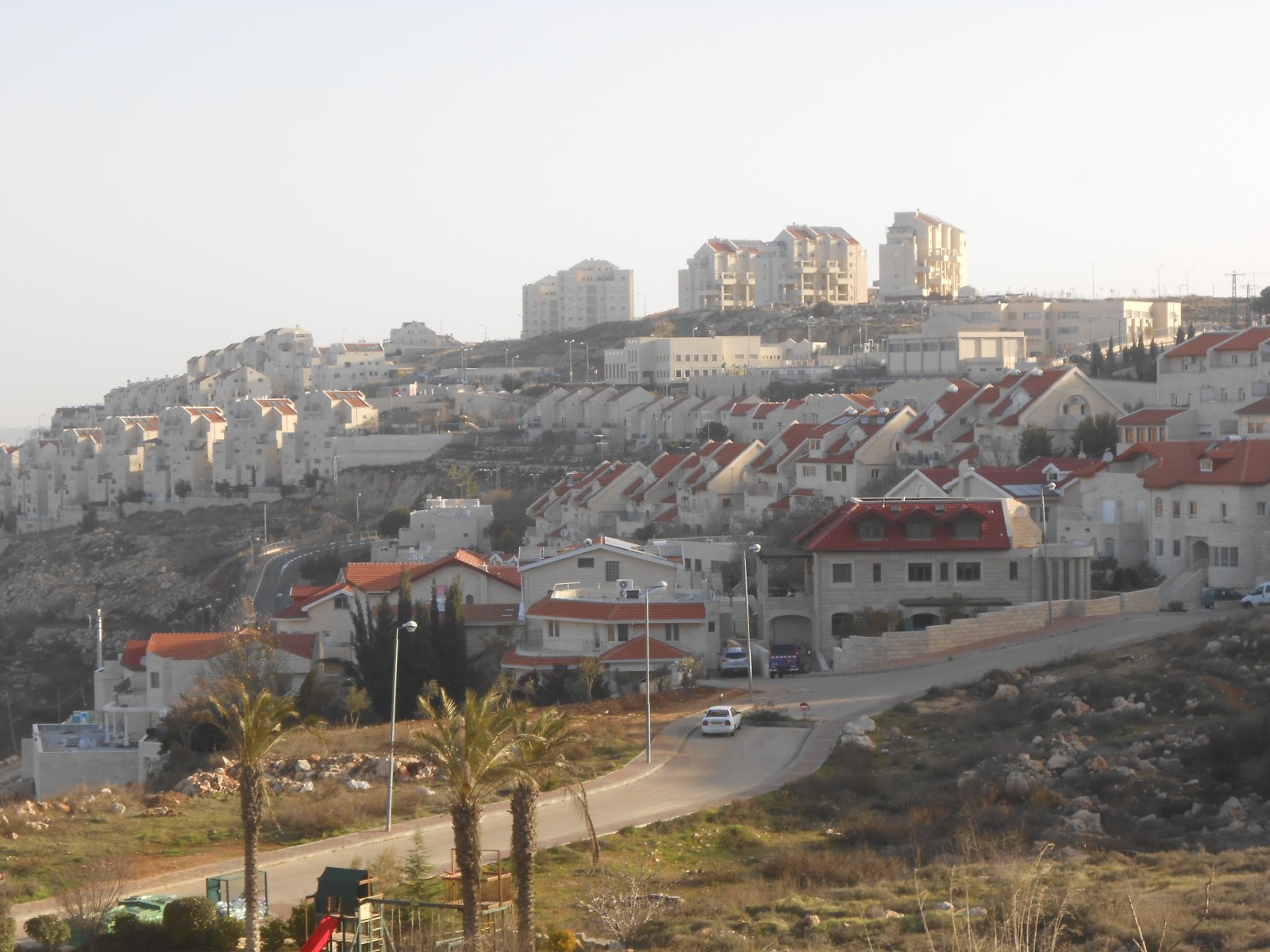
Settlement of Efrat
We left Bethlehem early (and shivering) to travel to the Settlement of Efrat, south of Jerusalem and Bethlehem in the West Bank.  Efrat has been in existence for over 20 years, so it has more of the feel of a suburb rather than frontier community.  We were to be hosted by Rabbi Aryeh Ben David, a psychiatrist and American-born Jew from New York that made aliyah (Hebrew word meaning Jewish return to Israel) in the idealistic spirit of the 60’s or 70’s.  The home was very comfortable, similar to a smallish townhome, situated on a hill with a beautiful view out of the patio doors. (In terms of size, it wasn’t much different from the Palestinian home where we overnighted.  The main differences were view, condition of the streets outside, and quite frankly, the heat.)  Ben David was an intelligent, hospitable man who tried to be as authentic as possible – knowing that many of us would not be sharing his point of view regarding settlements, so after introducing himself, he took a round of questions.  He related that there used to be the potential for neighborly relations with the Palestinians when he first arrived, as he had attended Jewish wedding celebrations with Arab attendees.  His 1960’s liberalism was tested when the PLO began punishing Arabs seen as too friendly with Israelis (or Israeli settlers?) by hanging them from telephone wires.  Israel demanded the practice stop or electricity be discontinued to the territories during that particularly cold winter, but according to Ben David, the Palestinians responded with, ‘go ahead, cut it off’ and continued to hang targeted community members.  Ben David pointed to that interaction as his impetus to put his life into the ‘battle of wills’ and decided to move to a settlement.

View from Ben David's patio
Ben David oft repeated that the land was Jewish land, and Jews were forced from it against their will, creating a ‘historical glitch’ similar to a woman who remarries after her first husband goes off to war and is presumed dead. He repeatedly returned to Arafat’s statement that Israel should be wiped from the map as justification for dismissing the Palestinian concerns and moving forward with unregulated settlements. Ben David seemed to dismiss Israeli culpability in the conflict, while insisting that Palestinians must prove their peaceful intentions for at least 10 years by changing their curriculum and halting all bombings before Israel should make any concessions.  In the meantime, settlements should continue, in his opinion, because the land is the Jewish inheritance from God.  (Interestingly, during our homestay in Bethlehem, our Palestinian host made the offhand remark that Jews claim it is their land from God, but their people broke the covenant, and therefore have no more right to the land.  It was an unsolicited comment, but apparently she knew this line of religious-political thought.) 

Home in the Efrat Settlement
Ben David has never been to a Palestinian territory, and has known Palestinians only through his military service and limited interaction with his gardener.  He shared a harrowing tale of the complex builder, an Arab, who was spotted in the settlement grocery store by a neighbor who, confused by his abnormal presence, looked closely and recognized explosives.  This settler neighbor, who happened to have a gun on him, shot the man in the grocery store and avoided a bombing that might have been the end of the Efrat settlement. Regarding peace with Palestine, our host explained that he specifically prohibits his children from saying they ‘hate’ Arabs (a meager answer if there ever was one).  He also made a point of letting us know that any American who thinks they know the answer to the conflict is simply naïve.  When challenged, Ben David bristled, saying that he does want peace and will sacrifice his home – given conditions like those above are met (which he thinks will never happen).  You got the sense of a self-fulfilling prophecy that allows him to believe he supports peace while exploiting the situation without acknowledging his complicity. However, in the last few moments we had with Ben David, he pulled on his psychiatrist hat and with grave seriousness and admirable vulnerability, reminded us that this is the Holocaust generation that is in power in Israel right now.  He argued that the trauma from the Holocaust is alive and well in Israel, and we can’t discount the effect that has on a population, when more than half of any gathering has a family legacy of loved ones murdered under genocide.  In contrast to our American arguments about prosperity, the argument in Israeli politics is existential (whether the state of Israel will exist tomorrow) and he indicated that the legacy of trauma alters the way a people react to this issue.

Ophir Yarden, the Director of Educational Initiatives at the Interfaith Coordinating Council of Israel, joined us on the bus to debrief some of what he heard from Ben David, and I found his layout of the political views in Israel extremely helpful.  Since Ben David had mentioned former Prime Minister Menachim Begin, the founder of the Likud (right-wing) party in Israel, Ophir explained his political reasoning.  For someone who supports the right wing, there are generally three reasons for the settlements:

Right-wing;
  1. Historically, the West Bank is ‘ground zero’ in the conflict with Palestine
  2. Religiously, the geography of the West Bank has religious significance, and is mentioned in scripture many times.  To do anything other than embrace that land is to spit in God’s face.
  3. Strategically, if Israel doesn’t hold onto the highlands (Golan Heights), all of Israel is vulnerable to attack.
For the left-wing, the answers to these arguments look like this;
  1. The West Bank has been ‘ground zero’ in the conflict, but we shouldn’t let history dictate the future
  2.  Religiously, this argument falls on deaf ears because the left is not typically religious.
  3.  There are equal number of military experts on the left testifying that Israel will not be vulnerable if it doesn’t hold the highlands.
  4.  Lastly, the left asks, what about demography?  What about human rights?  What about the price of occupation on the Israeli people – both in mental health and blood spilled?

Ophir continued to provide some of his personal (opposite) feelings to the Settler’s opinions.  For instance, where Ben David says he doesn’t allow his children to say they ‘hate’ Arabs, Ophir enrolls his children in a joint Arab-Jewish school so that friendships can actually be made.  When Ben David says peace is unlikely, Ophir paints the potential for land swaps and compromises. Where Ben David has shut the door on his conscience, Ophir keeps opening a window for hope. 

We head to Yad Vashem, (which denotes, from scripture, to give one a place and a name) the Holocaust Memorial in Jerusalem, but before heading in, Ophir provides a frame that alters my understanding of Israel going forward.  He asks us to pay attention to the messages of Jewish heroism and bravery throughout the museum.  We’ve walked along the path of the Righteous Among the Nations, where Carob trees are planted for each non-Jew who took action to save one from the Holocaust, and are standing in a courtyard that displays two statues – one depicting a march of broken, despairing people under military guard, the other a bust of 8 or 10 proud individuals in the midst of resistance and fighting.  The day Israel has designated for Holocaust remembrance is called “Holocaust and Heroism Remembrance Day”, placed in the middle of a religious month of celebration (rather than on days of mourning), with emphasis on the Warsaw Ghetto Uprising as much as the millions dead.  There were hundreds of instances of terror on Jewish populations in Europe long before the Nazi regime, particularly with the programs (or riots) in Russia against Jews starting as far back as 1821 in response to the assassination of the Tsar (rumours blamed a Jew for the assassination), but getting much more violent in 1881-1906.  Thousands of Jews were killed, often children, and rarely fought back.  Jews in Israel, on the other hand, were cultivating a militancy in their mindset – one necessary for their goal of an Jewish state.  Ophir talks about how State of Israel ceremonies and press conferences held in the square would always emphasize the statue of resistance, and that there was shame in the Israel mindset that Jews complied passively with Nazi regulations, like ‘sheep to the slaughter’.

Ophir says that Israel is a judgmental society, (or was in the 1950s), and Holocaust survivors, when they arrived in Israel, were often met with skepticism and suspicion, something I would never imagine.  They were asked questions like, “If it was so impossible to survive, how did you get out?  Did you steal someone else’s food?  Did you work for the Nazi’s to save yourself?” People who had fought the 1948 war, and suffered 6000 losses, felt that they, too, had been through hardship and were not receptive to airing the trauma of the Holocaust.  There was even slang to denote survivors, Hebrew for ‘bars of soap’ and referring to the Nazi’s use of bodies from the crematorium.  As a result, survivors were known to always wear long sleeves (to conceal the numbers on their arms) and for nearly 20 years, the Holocaust is not spoken of in Israeli society.  Not until 1961, when Adolf Eichman was apprehended by Israel’s Mossad intelligence force, and brought to Israel for the first public trial of the Nazi regime, were any stories of survival made public. And then, following the 90 Holocaust survivors who testified against Eichmann, who was the key figure in the deportation and ‘final solution’, the memory of the Holocaust was broke open in society and people began to talk about it.  

Tomb of Theodore Herzl
This is the development of Israel’s civil religion, Zionism – the right and safeguarding of a Jewish homeland in the land of Israel.  The theme of Jewish bravery and heroism continues central importance in Israel history.  Prior to WWII, Jews living in Israel were executing terror plots on the British authorities – partly due to the British limits on Jewish immigration (10,000 per year in spite of the rise of the Third Reich).  This rioting and conflict with native Palestinians caused Britain to turn the conflict over to the UN, which decided on the 1948 establishment of Israel (albeit with much different borders). In 1967, on the eve of the second war for Israel, Ophir says that Israelis are certain that they were on the brink of annihilation, but still marshaled themselves for a war they expected to lose – and yet are shocked by the fast victory.  The body of Theodore Herzl, founder of Zionism in 1891, is exhumed and brought to Mt. Herzl, adjacent to Yad Vashem.  He is interned in a box on a mountaintop – denoting the secular spiritual centrality of the (secular) Jewish people, in a striking parallel to King David.  Ophir calls this ‘secular messianism’ and credits Ben Gurion with the idea to make a secular shrine where the not-very-religious can make pilgrimage.  But in 1972, when the Israeli wrestling team is taken hostage by Palestinian terrorists in the Munich Olympics, the post-mortem analysis reveals that none of the hostages, premier athletes of Israel, fought their attackers before death.  The internal narrative of Israel’s civil religion continues to evolve regarding bravery, militancy and security – and we see it play out in the political debate concerning Palestine, the wall, and a two state solution.   

There are no words to adequately convey the experience of Yad Vashem.  Suffice to say, I thought I knew the holocaust.  But Yad Vashem will cause you to reconsider the concept of evil in the world.

 “I will surely bless you and make your descendents as numerous as stars in the sky”  
-Genesis 22:17

For thus saith the Lord unto the eunuchs that keep my sabbaths, and choose the things that please me, and take hold of my covenant;  Even unto them will I give in mine house and within my walls a place and a name better than of sons and of daughters: I will give them an everlasting name, that shall not be cut off.                  
-Isaiah 56:4-5;
    -Scripture that inspired the memorial for the 1.5 million children murdered by the Nazis.
…

The view upon exiting Yad Vashem
Reflection: Betrayal

I left the Holy Land Trust confirmed in my deep belief that face-to-face human relationship is the harbinger of peace.  I was affirmed in my call to break down the barriers that divide people in order create a sense of community that recognizes each other’s humanity.  That is by knowing each other, respecting each other, having simple solidarity with our commonality, we each have the ability to create cohesion, mercy, and community health.  I left convinced in my calling to work towards beloved community, which values compassion, justice and mercy for all kinds of peoples.  I was even challenged to recognize where I abstractly ‘other’ people (as in label, define, and decry them as ‘the other’) by labeling their theology or politics as creating exclusion or division.  And then each of those certainties was broken.

At first, I was just betrayed by my own sense of comfort. As we pulled into the Settlement of Efrat, I recognized my own spirit relaxing ever so slightly at the wide, clean streets, pretty homes, and welcoming heat of our host home.  It was disturbing to recognize that it was a place I would be comfortable living, as opposed to the disorganized, chaotic and dirty disrepair of Bethlehem.  Testament to the quality of life I was accustomed to, I immediately felt like I had already betrayed my solidarity with the Palestinian people.  Our Settlement host, Rabbi Aryeh Ben David, wound his self-validating circular logic (Palestinians aren’t willing to sustain peace, and therefore Israel should continue with theft of the land, regardless of the fact that land theft is what caused retribution to begin with), and it twisted me all up in knots.  I started to realize that Israel’s Fox-News-like narrative about security isn’t just for the outside world, but probably more useful and deadly in persuading the minds of Israeli citizens.  I couldn’t believe how Ben David didn’t connect the hypocrisy of his own narrative – that the Jews were forced from the land, and therefore have the right to return, regardless of the fact that they were now the same as the Roman Empire, forcing out the less powerful.  Micah rang in my ears from the sermon I had just preached on December 23rd…
They confiscate the fields they desire,
and seize the houses they want.

They defraud people of their homes,

and deprive people of the land they have inherited. (Micah 2:2)

You wrongly evict widows among my people from their cherished homes.
You defraud their children of their prized inheritance.

But you are the ones who will be forced to leave! (Micah 2:9)

I marveled at how Ben David had betrayed his own 1960’s idealistic roots to accept the systematic demeaning and theft of an entire race of people.  How from a betrayal of trust in the humanity of the Palestinian people, caused by one suicide bomber or the gruesome semantics of Arafat, this very decent man had not given up hope, but rather dismissed the necessity of dealing justly with an entire population of people.  How it betrayed the entire principles of a Jewish state run by the morality and principles of the Jewish faith that I have come to highly respect in America.  As he mentioned the Nazi-induced trauma inherent in the Jewish people’s worldview, I thought of the ripple effects of Hitler, creating a PTSD generation of Israelis, joining forces with 9/11 Islamaphobia to create a whole new set of hated scapegoats across the globe.  And then, before I knew it, and to my utter humiliation, I was just weeping while sitting on his couch…my façade betrayed by my emotions.

But you don’t really know what betrayal is until you’ve visited Yad Vashem – Israel’s Holocaust Museum.  I thought I knew the Holocaust.  We’ve studied it since 4th grade – I can still vividly recall the video shown of naked, starved bodies being bulldozed into graves.  I know about the effort to demonize, then label, then quarantine, then exploit, and finally extinguish the Jewish race. I knew they were starved, shot, and gassed; that some suffocated on the train ride to the camps; and that many Jews were made to do the killing work inside the camps of their own people.  I know the details of Anne Frank’s hiding, and can recite Martin Niemoller’s quote, ‘first they came for…’ from the bathroom stall in my college dorm. 

But I didn’t know about the Ukraine.  I didn’t know that, when the killing first began, the Nazis would enter a town and announce that 20 Jews would be killed in the town center that evening – and people would go out to watch.  Maybe even to cheer.  The villages were encouraged, not only to turn in their neighbors, but to take action themselves – so many willingly assaulted, raped, and murdered their own neighbors.  Neighbors.  People they knew, people they did business with, people they sat next to on the bus.  My belief that human relationship defeats evil fails in the reality of the Holocaust. I didn’t know that, in ghettos, Jews were compelled to turn in any of their own family members who couldn’t work – infants and elders - sometimes carrying their own parents on their backs to turn over to the Nazis for murder.

To betray your own parents, to be forced to betray your responsibility to your child – your basic human instinct towards care and compassion bent and twisted and stripped is a wound I can’t imagine.  The betrayal of every relationship, everything you had come to expect as normality, would collapse anyone’s trust in humanity. And it would have ripple effects.  At this moment, for me, the core of Israel and our study tour changed, and just like that, I felt like I betrayed my commitment to fight for the underdog during this trip.